 Jaka Fefer · Portfolio
EasyX
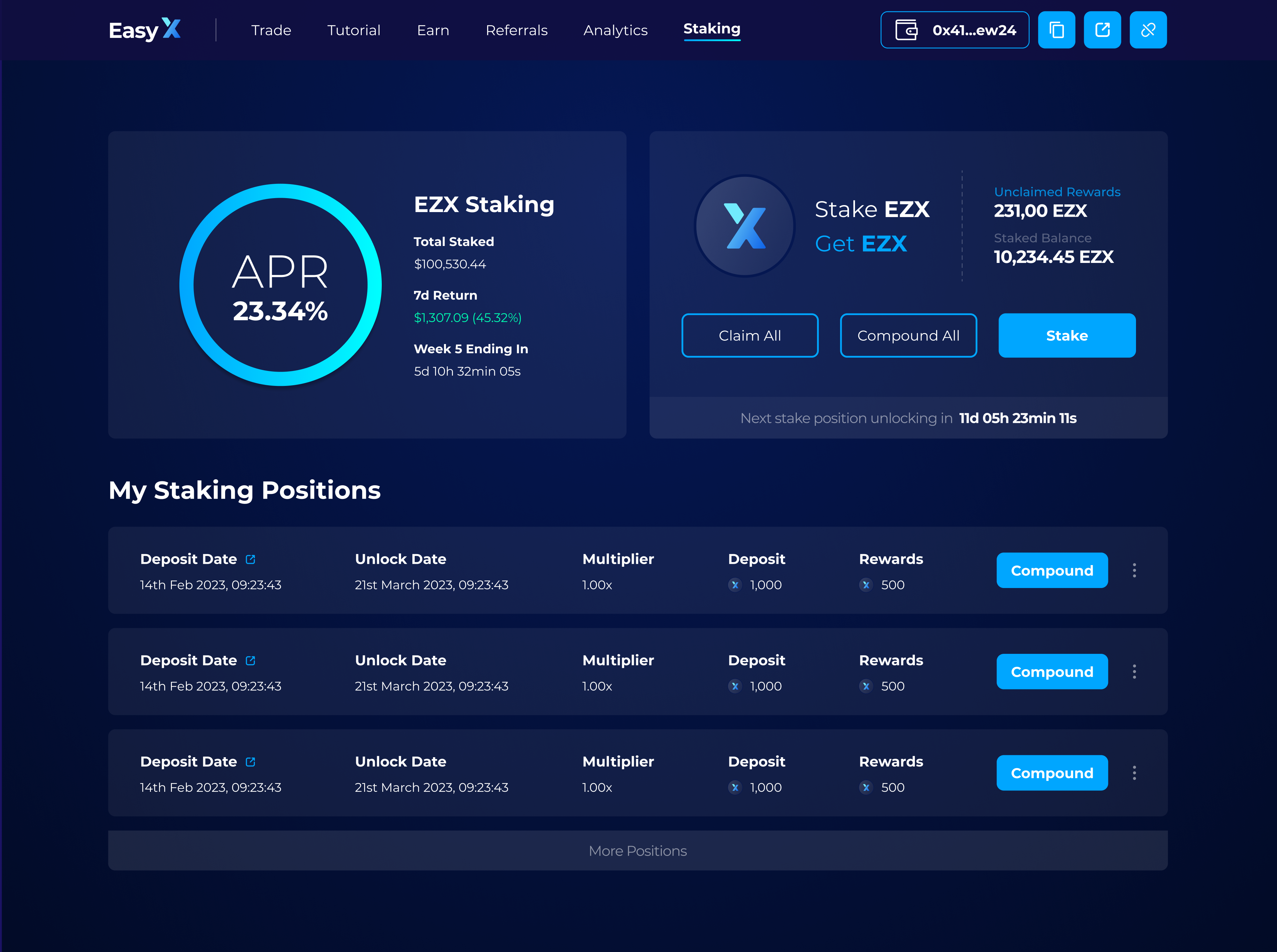
Beginner traders were quitting after costly early mistakes, so I designed education-first onboarding and a practice sandbox, and onboarding completion rose about 40%.
Role
Founding Product Designer
Dates
Jan 2022 - May 2024
Team
Small team, product and engineering
Impact
- Onboarding completion rose about 40%
- About 60% fewer errors on irreversible actions than the pre-design baseline
- Users who practised in the sandbox first were three times as likely to complete their first real trade without errors
Problem
EasyX was built for people who want to start trading but don't yet understand the risks, the terminology or the mechanics. Most platforms assume prior knowledge and push beginners into irreversible actions too early. In interviews and tests, beginners hit three failure modes. They didn't know what a screen was asking, so they hesitated or clicked through. They couldn't tell what would happen next, especially when an action could not be undone. And an early mistake cut their confidence, so they dropped off. Users who made an early mistake rarely came back, however fixable it was. The business goal was to win the beginner segment by cutting churn from those mistakes.
- Beginners didn't lack information, they lacked the confidence to act on it
- Predictability and transparency built more trust than safety features did
Decisions
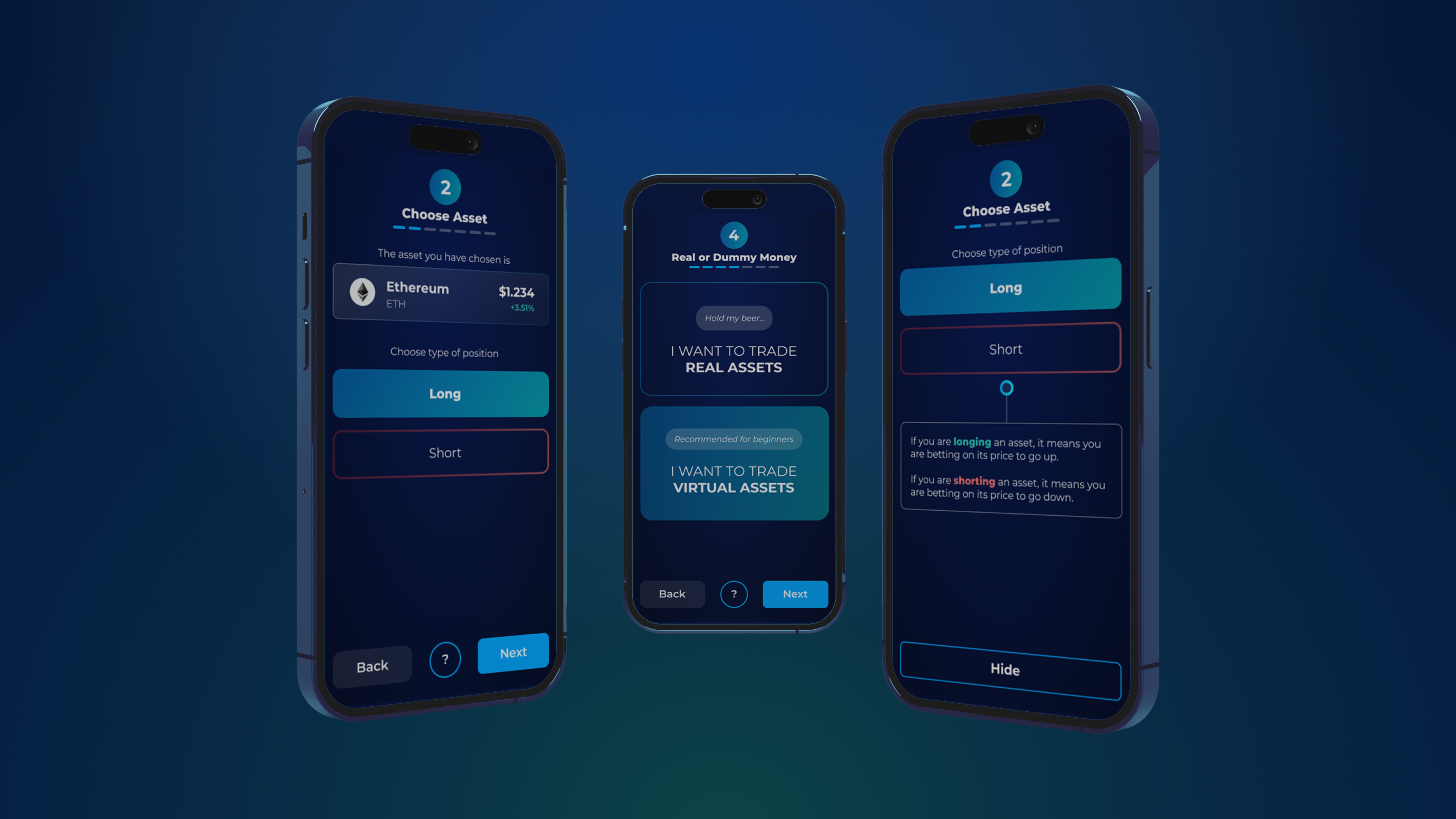
1. Education-first onboarding
Beginners were dropped straight into trading screens and froze. In 6 of 8 interviews people described hesitating on screens where they couldn't predict the outcome, and fear of mistakes was the top reason for not finishing onboarding in the survey.
The CEO wanted the usual connect-and-trade flow. He saw the product as an advanced trader would, and this was a product for beginners. I took him through the interviews and tests with 50+ people and showed where the friction was, then designed onboarding that teaches the core concepts one step at a time and brings up responsibility and safety early.
Made against the founders' preference at the time.
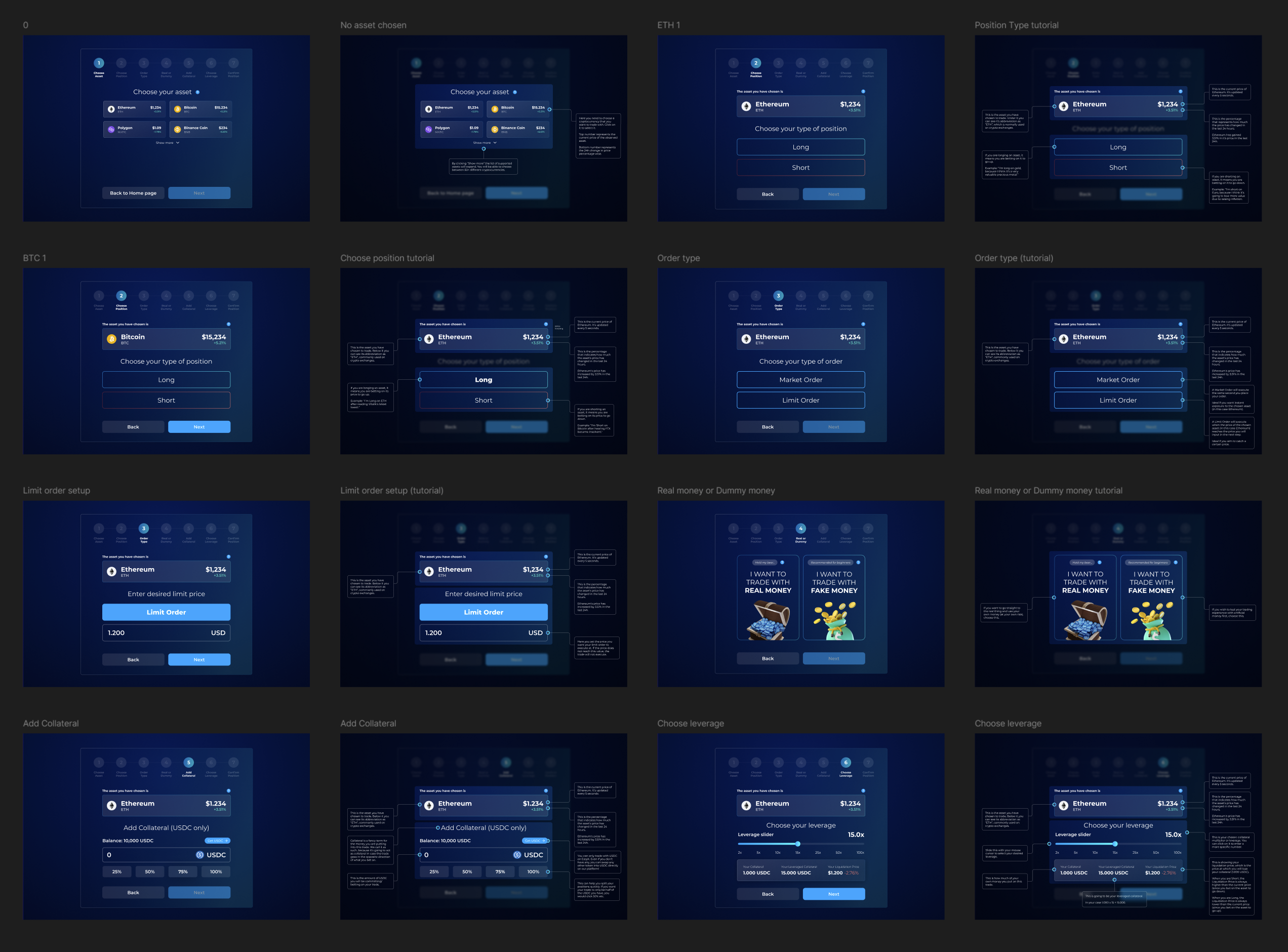
Evidence. The completion gain under Impact came from the prototype test of this flow.
2. Sandbox before real money
Every first trade risked real money, so beginners avoided acting at all and learned nothing.
I designed a sandbox where users practise the full flow with dummy money before they touch real funds. The choice sits inside onboarding as its own step.
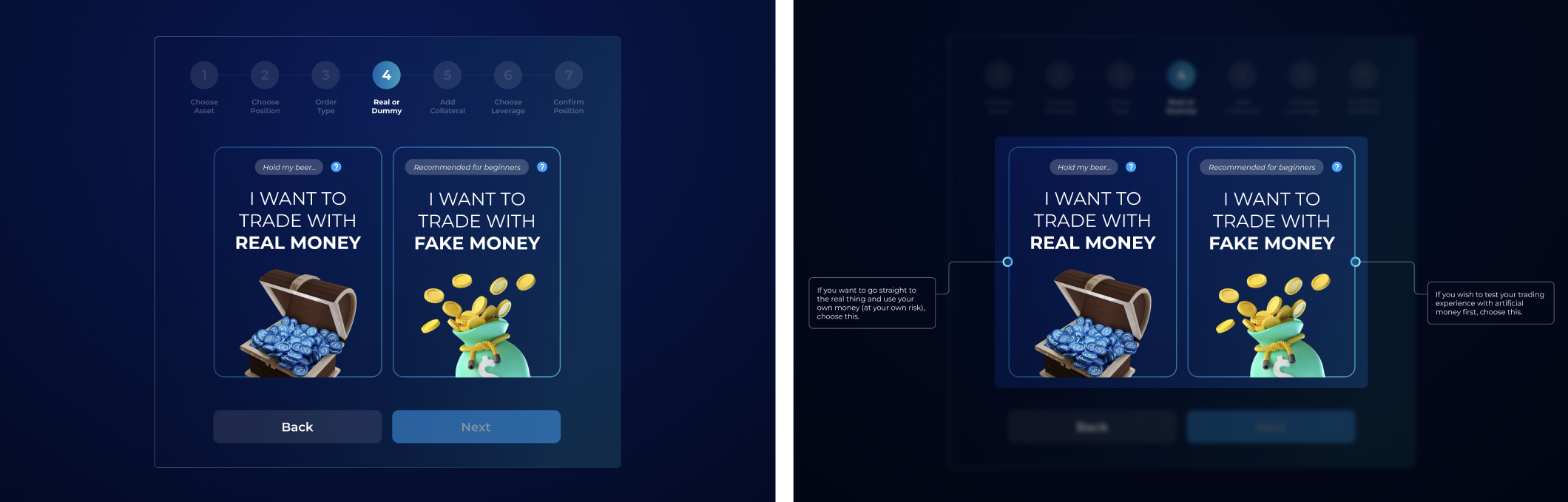
Evidence. In usability testing, users who practised first completed their first real trade without errors far more often than those who did not.
3. Make state and consequences explicit
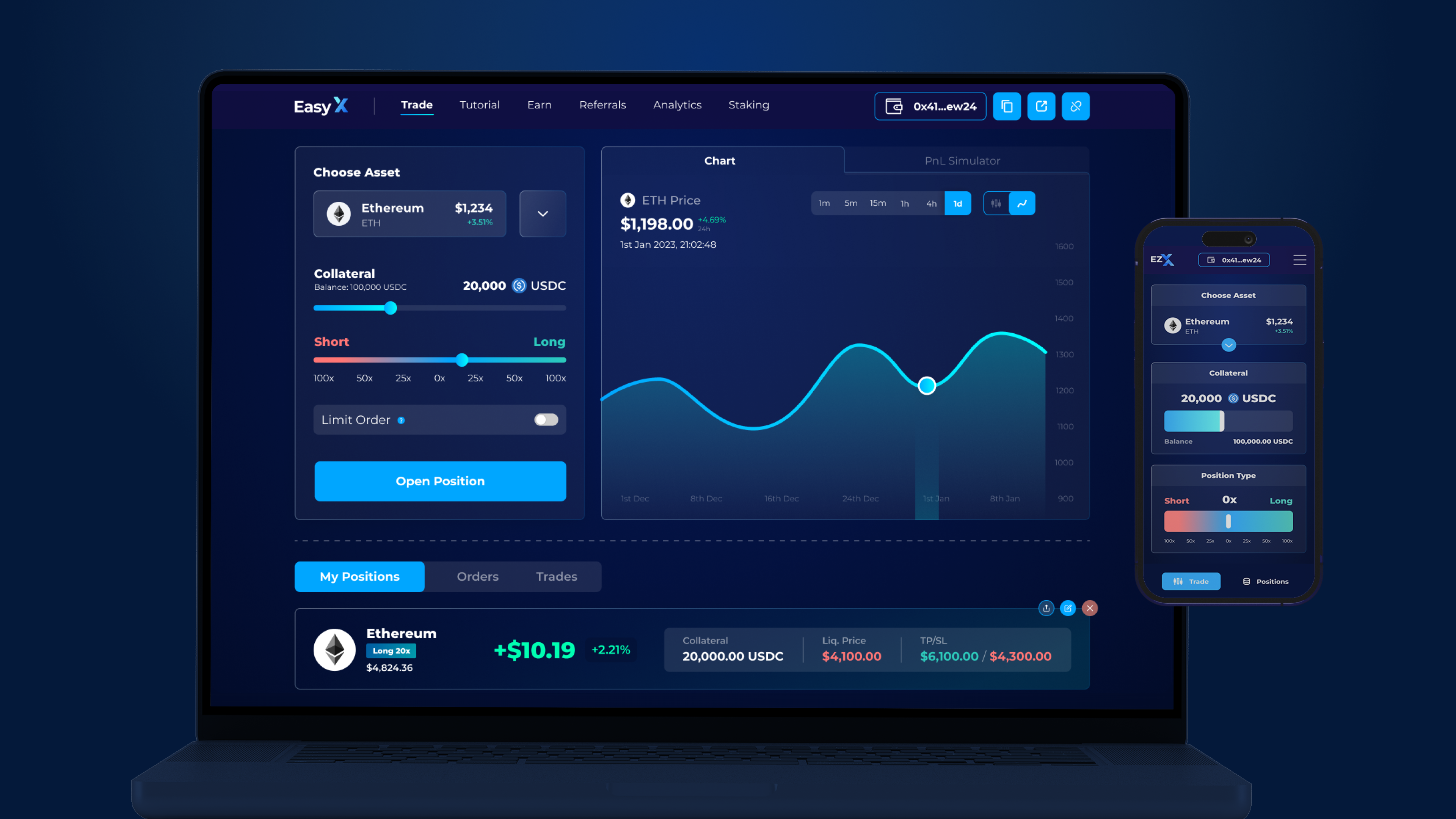
Users couldn't tell what an action would change or whether it could be undone, and confirmations built for speed let accidental trades through.
I designed flows that state the current state, the consequence and the next step, with confirmations on irreversible actions, without hiding how the system works.
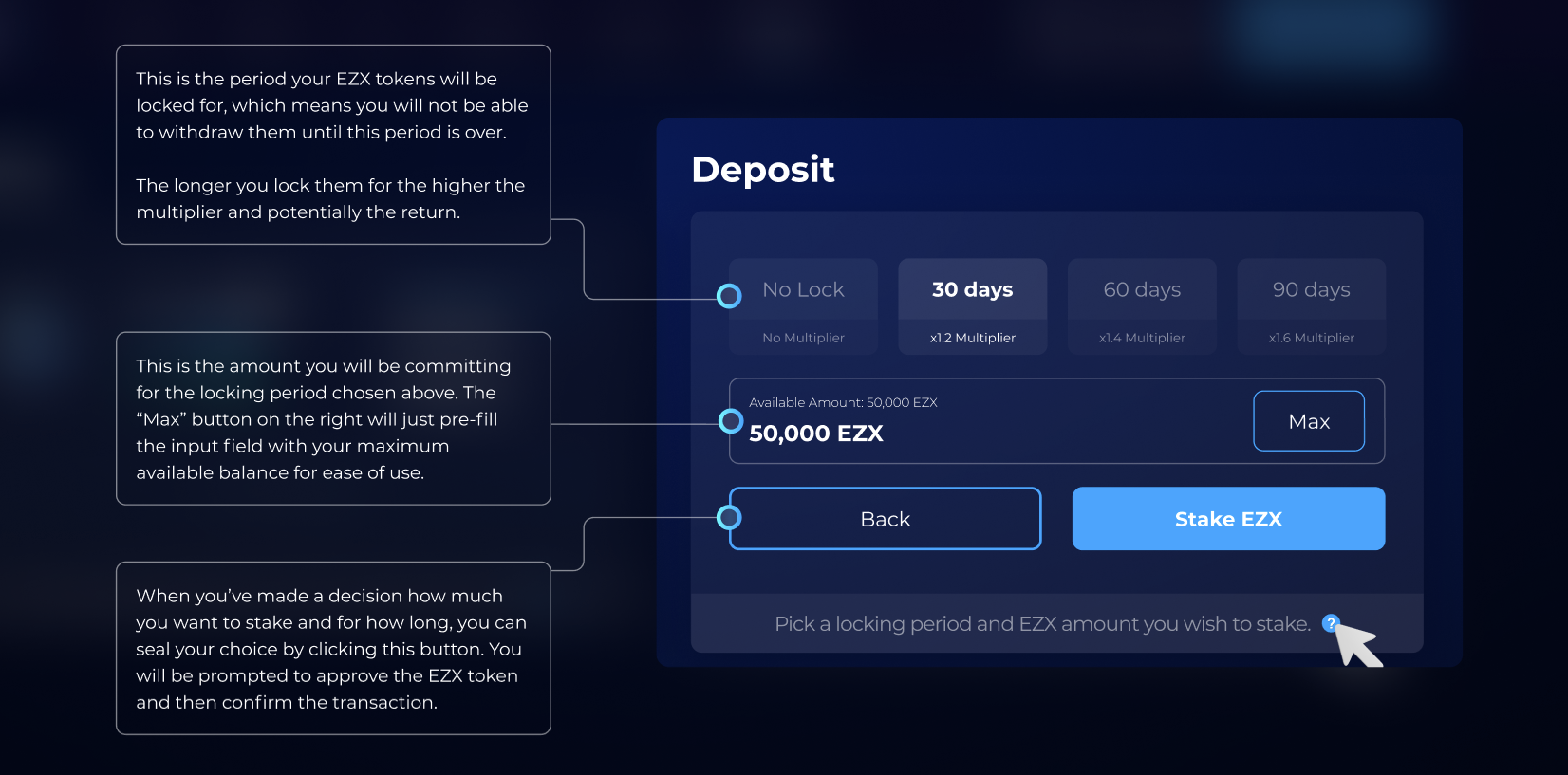
Evidence. Post-launch analytics showed the drop in errors on irreversible actions against the pre-design baseline.
Reflection
- I would run structured usability testing earlier, aimed at onboarding comprehension and the moment before an irreversible action.
- I would define success metrics on day one, so learning outcomes and confidence could be measured over time rather than read off completion rates.